
bathroom privacy glass
Low Emissivity Glass: what’s real, what matters, and where the market’s heading If you’ve been pricing low emissivity windows lately, you’ve probably noticed two things: specs keep getting sharper, and lead times (surprisingly) are getting more predictable again. I’ve spent enough time on factory floors to know the difference between brochure-speak and glass that performs in brutal summer sun or a Midwest cold snap. How it works, in plain English Low-emissivity glass (low‑e) is a coated glazing that lets visible light through while bouncing infrared heat back where you want it—inside in winter, outside in summer. There are two mainstream production routes: online pyrolytic (a “hard-coat” formed at high temperature) and offline vacuum magnetron sputtering (a “soft-coat,” usually with 1–3 nano-thin silver layers). The latter is what architects pick when they want top-tier U‑factors and controlled solar gain without killing daylight. Process flow and quality checkpoints Materials: float glass substrate (4–12 mm), silver and dielectric stacks (e.g., Ag/Si3N4/ZnO), PVB or SGP if laminated. Methods: online pyrolytic deposition or offline magnetron sputtering; then edge deletion (≈10–15 mm), tempering/heat-strengthening, IGU assembly with warm-edge spacer, argon fill, secondary seal (polysulfide or silicone). Testing: optical/spectral per EN 410/ISO 9050; U-value per EN 673; IG durability ASTM E2190 or EN 1279; tempered safety EN 12150; coated glass performance EN 1096; Chinese market often references GB/T 18915 and GB/T 11944. Service life: around 20–30 years for well-made IGUs; seals are the make-or-break. Industries: residential fenestration, curtain wall, retail fronts, healthcare, museums, and data centers (yes, really—glare and cooling loads matter). Typical product specs (Low Emissivity Glass) Coating options Single, double, triple silver (soft-coat); pyrolytic hard-coat for rugged handling Visible transmittance (Tv) ≈ 55–70% (real-world setups may vary) Solar heat gain coefficient (SHGC) ≈ 0.23–0.45 depending on stack and tint Center-of-glass U-factor ≈ 1.0–1.3 W/m²·K with argon double-glazed; lower with triple Emissivity (ε) ≈ 0.02–0.15 (stack dependent) Max size ≈ 2440 × 3660 mm (larger on request, check line capability) Vendor landscape (quick take) Vendor Strengths Certs/Standards Lead time CMG, Shahe, Hebei (origin: North Second Row, East Side of Dadong Logistics, Economic Development Zone, Shahe City, Xingtai, Hebei) Online + offline capability; custom stacks; in-house tempering and IG ISO 9001; EN 1096/EN 1279 testing; NFRC data where applicable ≈ 2–4 weeks, project load dependent Regional Fabricator A Fast local service; standard double-silver EN 1279; ASTM E2190 ≈ 1–3 weeks Generic Import B Aggressive pricing; high MOQs Claims vary—verify test reports ≈ 4–8 weeks incl. transit Applications, customization, and real-world notes - Homes: many customers say low emissivity windows made rooms calmer—less glare, fewer hot/cold spots. - Offices/curtain wall: double- or triple-silver stacks to hit SHGC targets while keeping Tv > 60% (daylight matters). - Retail/museums: neutral color rendition; laminated low‑e for security and UV control. Customization: thickness 4–12 mm, single/double/triple silver, clear/grey/green substrates, edge deletion width, warm-edge spacers, argon/krypton, heat treatment, lamination, silkscreen frits for façade rhythm. I’ve seen specifiers tweak just one dielectric layer and claw back a crucial 2–3% in daylight—small edits, big payoffs. Test data snapshot (indicative) Double-glazed IGU, 6‑12‑6, double-silver soft-coat, argon 90%: Tv ≈ 62%, SHGC ≈ 0.28, center-of-glass U ≈ 1.2 W/m²·K. Whole-window values will be higher; check NFRC/CE labels and the frame’s thermal break. To be honest, frames often make or break the spec. Trends I’m watching Triple-silver is becoming the baseline for Class‑A offices; warm-edge spacers are no longer “nice to have”; EPDs and LCA data are showing up in bid packs; and, actually, more owners ask for bird-friendly patterns bonded to low emissivity windows without compromising optical clarity. Citations NFRC 100/200/500 rating procedures EN 410: Glass in building — Determination of luminous and solar characteristics EN 673: Thermal transmittance of glazing ASTM E2190: IGU durability ISO 9050: Glass — Solar and light transmittance EN 1096: Coated glass for building
-
laminated glass metal mesh
laminated glass metal mesh
View Details -
led mirror price
led mirror price
View Details -
clear float glass suppliers
clear float glass suppliers
View Details -
rectangle glass mirror
rectangle glass mirror
View Details -
standing vanity mirror with lights
standing vanity mirror with lights
View Details
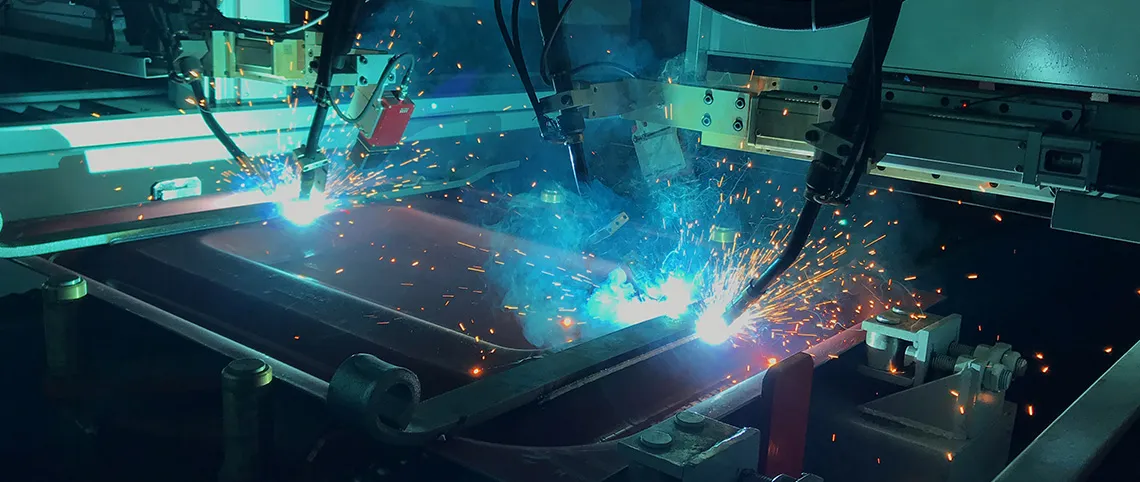
Our application
-
 read more
 -
 read more
 -
 read more
 -
 read more
 -
 read more
 -
 read more
news and information
Valvola di ritegno di mezzo pollice
Valvole di controllo da mezzo pollice Funzioni e applicazioni Le valvole di controllo da mezzo polli
Y Type Strainer Cleaning Procedures
In industrial fluid systems, Y type strainers are essential components that effectively filter out i
valve gate valve
Understanding Valve Gate Valves An Essential Component in Modern Industry In various industrial appl